Drainage System Process

How Poor Drainage Causes Foundation Problems

Water is one of the greatest detriments to a foundation. Even the most sturdy and modern foundation system will fall far short of its lifespan if it’s exposed to an onslaught of pooling water. This is why homes have gutters and downspouts. Many homeowners don’t believe a seemingly benign puddle can cause foundational damage. This post is intended to convince them otherwise.

The Implications of Poor Drainage Around a House

How exactly does water damage a foundation? Water that is allowed to remain in a single place for prolonged periods produces the ideal growing conditions for mold and fungus. This is especially the case after a storm, which leads to a pooling of gray and even black water. The damage can also extend to the basement. This leads to interior wood rot and increased risk of indoor flooding. In turn, this can damage other components, such as the electrical wiring.

Another problem is that the water can seep into the soil. This can lead to some parts of the soil expanding that shifts the foundation, leading to cracks. The amount of water absorption by the soil depends on the geographic location. Some parts of the Dallas, TX, region have clay soils. This makes a properly functioning drainage system all the more important.

How to Improve Drainage

First, inspect your gutter system. Get on a ladder and clean out any debris. You should do this after every storm. While up there, check the unit for damage. If the gutter is sagging or detaching from the house, then it needs repairs or a replacement. Also, check the downspout. As a general rule, the point where the water exits should at least be three-feet away from the house’s base. We can’t overstate the importance of this. Every inch of rain that hits the roof causes as much as 600 gallons of water runoff that exits the downspout. You don’t want that amount of water resting near the foundation.

Sprinklers are another primary source of pooling water. Invest in a sprinkler and irrigation system that automatically adjusts settings. Nowadays, there are smart sprinkler devices that enable users to turn the system on and off via mobile device.

We Improve Residential Drainage

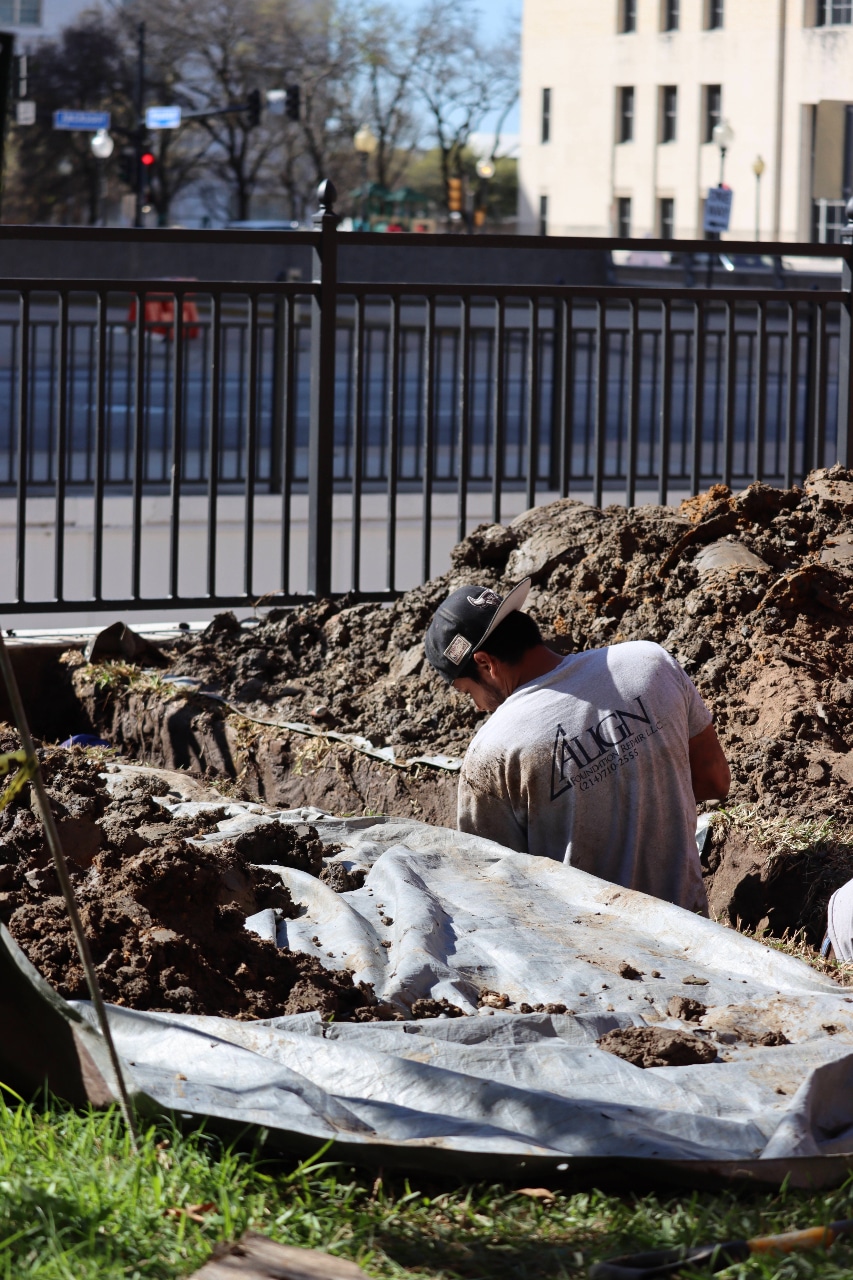
Our foundation repair services include drainage system repair. Poor drainage near the foundation can result in cost-prohibitive damage. Prevent this altogether by calling Align Foundation Repair.

Springtime Foundation Maintenance Tips

Spring is the season for Richardson homeowners to organize, clean, de-clutter, and address any repairs that need attention. It may also include a foundation inspection and maintenance to ward off potential problems that could prove costly later on.

Checking gutters, fixing roofing damage, and other simple chores can help ensure proper drainage and identify potential issues early in the game. If you notice any worrisome signs during your spring maintenance, a professional home inspection can determine if you need Richardson foundation repair.

Here are some simple tips to ensure your home’s foundation is protected.

Check Your Gutters

Gutters clogged with leaves and debris are a big problem during heavy rains. Thoroughly clean them to ensure they are draining well and also look for minor leaks in the process. Also, make sure that your downspouts direct water away from the foundation, as excess moisture can lead to gradual damage.

Visual Inspection of Concrete Around the House

Walk around the entire exterior of your home, looking for concrete settlement or movement around patios, walkways, garage, and the driveway.  Cracks in the foundation can have many different sources and are not always cause for concern. A professional inspection can determine if the cracks are minor or potential signs of water damage that could require foundation repair services.

Look for Plumbing Leaks

Springtime maintenance also includes evaluating the home for possible plumbing leaks. It is a good idea to have a plumber do a leak test every 12-24 months.

Examine Your Roof

Texas winters can be extreme, so it’s essential to examine your roof for damaged shingles. It’s also an excellent opportunity to inspect the flashing around vents, skylights, and chimneys to ensure no water is leaking in. Replace buckled or cracked shingles promptly. Also, take the time to remove mold and organic debris off the roof surface.

Improve Soil Structure Around the Home

Heavy spring and summer rains can lead to flooding and standing water near the house. The land should be properly graded with well-draining organic compost to improve soil structure around the foundation. If you decide to plant shrubs or ground cover near the home, choose drought-tolerant plants that require little irrigation.

Foundation Repair Richardson TX

If you have encountered a problem during spring maintenance, call Align Foundation Repair for a prompt, free estimate. Our Richardson TX foundation repair service is backed by a Transferable Lifetime Warranty.

We are a family-owned and operated business and trusted foundation repair experts in the Dallas-Fort Worth area. Call today for your free foundation repair estimate.

What Causes Concrete Pool Decks to Sink?

Surrounding your inground pool with a concrete deck is a great way to enhance its beauty and functionality. But even a well-made pool deck can sink into the ground over time, causing it to crack, crumble, or break apart entirely.

As local concrete pool deck repair contractors, we see this problem occur on a regular basis here in the Dallas-Fort Worth area. Usually, it can be traced back to one or more of the following causes:

Causes of a sinking concrete pool deck

  1. Loosely compacted soil: A concrete deck can weigh up to 100,000 pounds, a tremendous load for the ground beneath to bear. Swimming pool installers try to compensate for this fact by compacting the soil beneath the deck. But sometimes they get in a hurry and fail to do a thorough job.
  2. Changing weather patterns: We all know that it gets really hot in North Texas during the summertime. But cold winters are also fairly common in our region of the country. This yearly shift in temperatures can cause your deck to swell and contract, creating stress fractures that contribute to sinking.
  3. Erosion: Rainwater can also cause a sinking concrete pool deck, especially if it finds its way into the underlying soil. The risk is especially high after a heavy downpour, but even occasional rainfall can have an erosive effect on your deck.
  4. Sinkholes: Not all sinkholes are large or easy to see. Smaller ones can form beneath your pool deck, causing it to slope or crack.
Contact Align Foundation Repair to repair your sunken pool deck today.

A problem you cannot ignore

A sunken pool deck is more than a cosmetic issue. It also poses serious risks to your family’s safety by creating trip or fall hazards. That’s not to mention the impact it can have on your home’s resale value.

The longer you wait to address this hazard, the more you put yourself and your loved ones at risk. The time to act is now.

Concrete pool deck raising

As concrete raising professionals, we’ve restored sunken decks all across the Dallas-Fort Worth area. We begin by injecting an expandable compound into the soil beneath the deck that raises and levels it.

After that, we correct any remaining aesthetic problems such as cracks or fractures. When the job is done, we’ll leave you with a restored pool deck that looks and functions as good as new.

Here at Align Foundation Repair, we’re known and respected throughout North Texas as a leading pool deck repair contractor. Call us today to schedule your free, no-obligation quote. When your deck has you feeling down, we can give it a lift!

Align Foundation Repair commercial drainage system installation in downtown Dallas OPTIMIZED

What Are the Types of Surface Drainage Systems?

Flat, even terrain is ideal for both residential and commercial construction. Unfortunately, tracts of level land are also vulnerable to heavy rainfall, which can saturate the soil or create stagnant pools of water that take months to evaporate.

Saturated soil and standing water can promote mold growth in your home or commercial building or even cause catastrophic damage to your foundation.

One of the best ways to deal with groundwater problems is to install surface drainage systems on your property. These solutions can provide excellent results when used in conjunction with your existing gutters and downspouts.

Two of the most effective options for managing groundwater are surface drains and French drains. Let’s look at how they work.

Surface drains

A surface drain is a ground-level grate placed over an underground catch basin. It’s installed at locations on your property where rainwater tends to pool.

Typically the basin is connected to buried pipes that direct the water to a central collection point such as a lake, stream, city sewage system, or street.

Surface drains do require occasional cleaning to prevent clogs. The grates are visible to onlookers, which may present an aesthetic concern for some property owners. Still, they’re an efficient way to prevent standing water from damaging your home, commercial building, or landscaping.

French drains

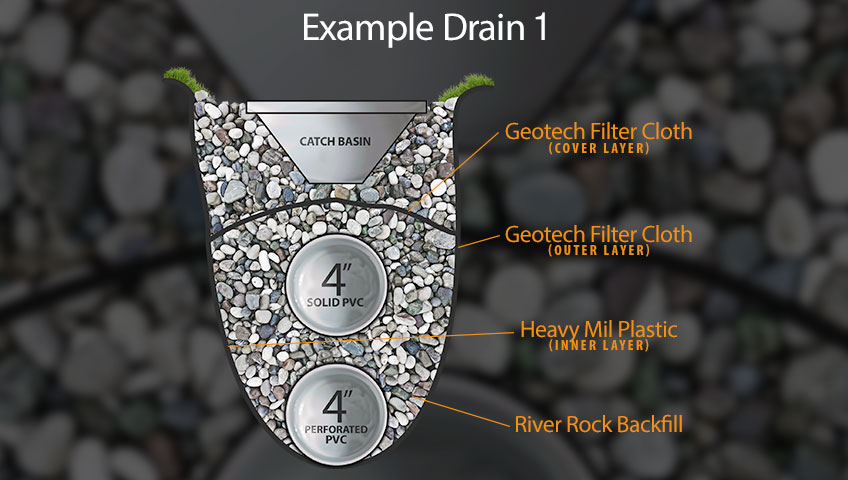
A French drain is a channel cut into the soil and lined with landscaping fabric. Corrugated pipe is placed in the drain and covered over with gravel or loose stone. The drain is sloped so that it flows away from the building.

Properly installed French drains resemble naturally formed stone paths, making them a great way to complement shrubs, flowerbeds, and other landscaping features. They’re more effective than surface drains at managing saturated soil. However, they’re also more expensive.

Which solution is right for you?

Which surface water drainage system is right for you? The answer to this question depends on many factors, such as the types of structures you have on your land and the contours of your property.

Determining the best way to go takes a professional on-site evaluation, which is where Align Foundation Repair comes into the picture. Our track record of success gives you the confidence that we’ll do the job right the first time.

Already have a groundwater management system in place that needs servicing? We also provide comprehensive surface drainage system repair services.

Every moment you wait puts your home or commercial building at risk of groundwater damage. To learn more about our drainage solutions, call us today.

Home Foundation Repair Financing

How to Pay for Foundation Repair with No Home Equity

A damaged foundation is one of the worst problems a homeowner can face. Left uncorrected, it can ruin your home’s value while exposing you and your family to serious safety risks.

Despite this fact, many homeowners put off having their foundation repaired, often due to fears of high costs.

If this sounds like you, then we have good news. Not only is the work more affordable than you may think, but there are many possible ways to pay for it. This is true even if you have no equity in your home.

Align Foundation Repair offers financing arrangements with low monthly payments, no prepayment penalties, and interest rates as low as 8.9%.

We’ll look more at these financing opportunities in just a bit. For now, let’s consider the high cost of ignoring foundation repair.

What Happens When Good Foundations Go Bad

Here’s what happens when your home’s foundation starts to fail:

  • Creaking doors and cracked windows: One of the first signs of a damaged foundation is a door that no longer fits its frame. As the problem worsens, you may notice your windows cracking or falling out altogether.
  • Unlevel floors and out-of-square walls: In a properly built home, corners are an even 90° and floors run straight across with no sagging. A damaged or sinking foundation can destroy these important symmetries, damaging your home’s framework and ruining its aesthetics.
  • Cracked Drywall: Telltale signs of a settling foundation are cracks in the drywall. Cracks may appear horizontally, vertically, or in “stepped” formation. The larger the cracks, the more likely they are due to foundation issues.
  • Collapsing chimneys: A sagging foundation can cause a brick chimney to lean sideways until it falls down altogether, creating a potential fire hazard and exposing you to legal liabilities.

Foundation Repair Payment Options

As you can see, foundation problems are too serious to ignore. Now let’s look at ways to pay for the necessary repairs:

  • Savings: Putting aside a little money for a rainy day is a time-honored way of guarding against future calamities. What better way to use these funds than to fix a damaged foundation?
  • Personal loans/credit cards: If you’ve suffered financial problems in the past, then a friend or family member may be able to cosign on your behalf.
  • Financing arrangements through our affiliated lenders: These programs offer several advantages, including 12-month same-as-cash, long terms to keep the monthly payments low, no prepayment penalties, and interest rates as low as 8.9%.

Contact us here at Align Foundation Repair today to learn more. We’ll provide you with a no-obligation quote, explain your options for financing foundation repair, and leave you with the facts you need to make an informed decision.

Uneven Concrete Sidewalk

Cost-Effective Sidewalk Repair

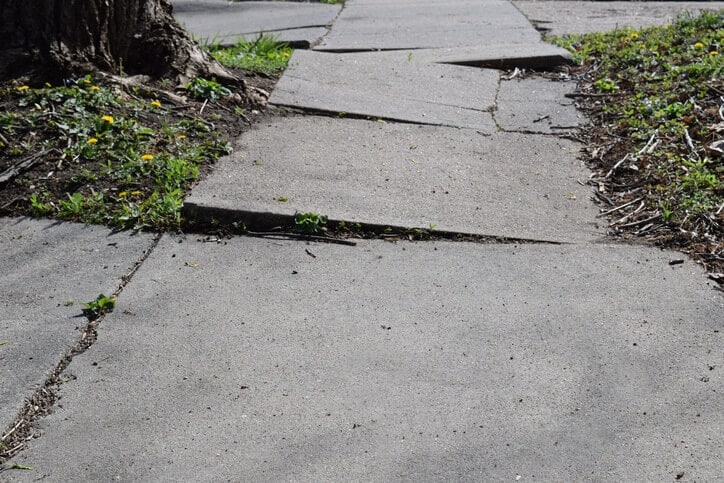
Over the years, sidewalks can sink, crack, or shift out of place. This can occur so slowly that the damage escapes notice, getting worse and worse until it becomes an ugly eyesore.

When this happens, you may find yourself dealing with serious risks to your home’s value and your family’s wellbeing, including:

  • Foundation damage: Sunken sidewalks can channel rainwater towards your foundation, causing your basement or crawlspace to flood. Over time, this may cause the foundation itself to fail, a catastrophic safety hazard that can cost tens of thousands of dollars to repair.
  • Serious personal injuries: A sunken or uneven sidewalk is a 24/7 trip hazard. Even if you rarely use the walkway yourself, you may find yourself legally liable for accidents that occur on your property.
  • Mold and mildew in your home: Mold spores love a wet, cool, dark environment in which to fester. Anything that compromises your home’s foundation can promote the spread of mold and mildew throughout your residence.
  • Trouble selling your home: A sunken or damaged sidewalk can make your home less appealing to potential buyers, forcing you to reduce your asking price or lose the sale altogether.
Contact Align Foundation Repair and start taking care of these risks today.

The solution: professional sidewalk raising

Does your sidewalk need fixing? Concrete sidewalk raising is an effective, affordable way to repair damaged or sunken sidewalks. Here’s how it works:

  1. Our technicians conduct an on-site inspection to learn the cause of the problem: In most cases, they find that erosion has washed away the soil under the sidewalk, causing it to sink.
  2. A technician injects an expandable compound into the gap: This is an eco-friendly material that fills the void left by the eroded soil, raising the sidewalk and making it level once more.
  3. We repair any remaining cosmetic problems: You’re left with a safe, attractive sidewalk that’s a beautiful complement to your home and an eye-catching feature to potential buyers.
We do more than just raise your sidewalk. Contact Align Foundation Repair for a free estimate.

Not a job for DIYers

We salute DIYers for their can-do spirit. But leveling a sidewalk is best left to professional concrete raising services with the proper equipment and training. Trying to save a few pennies on your concrete sidewalk repair cost can put you at risk for all sorts of expensive consequences, from broken concrete to broken bones.

Align Foundation Repair is a veteran-owned company that believes in old-fashioned values like honesty, integrity, and hard work. We’re proud members of the local business community.

Contact us today for your no-obligation quote. When you do, ask about our concrete sidewalk repair financing options.

Align Foundation Repair commercial surface drainage installation

What is a Surface Drain?

Many property owners experience drainage issues around their homes. Addressing this is crucial to avoiding expensive repairs related to foundation damage and problems with standing water.
In this case, the installation of a surface drain will benefit homeowners. These systems are especially helpful when accompanied by grading, contouring, and sloping while also providing a multi-layered defense against the impact of rain and other forms of precipitation. Align

Foundation Repair is here to explain how surface drains work, why they’re essential, and the benefits for your property.

A surface drain protects your home or commercial property from the effects of standing water. It works in conjunction with safeguards such as grading, contouring, and sloping while also providing a multi-layered defense against the impact of rain and other forms of precipitation.

What Can Drainage Problems Do to Your Property?

Pooling water around your property doesn’t only impact aesthetic appeal and comfort; it can also lead to the following:

  • Foundation Damage – Surface water will eventually sink down through the soil surrounding your home, putting pressure on the concrete foundation. Should the concrete crack, your home can become less structurally sound, requiring expensive repairs.
  • Landscaping Issues – Pooling water will negatively impact plants and grass by increasing disease risk. You may notice brown spots and wilting leaves, which diminishes the appeal of your landscaping.
  • Unhealthy Environment – Stagnant water can foster bacterial growth and attract pests like mosquitoes and termites. In addition to being unpleasant, these pests around your home also pose health risks.

How Do Surface Drains Work?

Surface drains collect water pooling on a property’s surface and disperse it to a city sewer in urban areas or a river or stream in rural areas. Here’s how it works:

  1. A contractor installs underground pipes and a catch basin: Gravel is placed beneath these components to allow excess water to flow into the ground.
  2. The pipes are topped off with either a flat or atrium grate: This is done to prevent people or animals from falling into the drain. It also helps to control soil seepage and plant growth inside the pipes.
  3. The pipes flow to a carefully chosen location: It is often a city sewer facility in urban areas or a river or stream in rural areas.

While similar in principle, surface drains differ from French drains, another standard solution. A French drain is primarily used for water that would otherwise saturate the underlying soil and cause root rot or other problems. It is visible above the ground as a channel filled with gravel or stone. A surface drain is usually covered by earth and invisible except for the entrance grate and exit points.

What Are the Benefits of Surface Drainage?

While good drainage on your property offers a variety of benefits, protecting your home’s foundation is crucial. As noted, poor drainage can lead to serious foundation defects, particularly if the problem has existed for a long time. Pressure from water-saturated soil can cause cracks in concrete, substantially weakening the foundation.

The ensuing instability will affect all areas of the home. Cracks can form in walls and ceilings, floors may become uneven and buckle, and doors and windows will no longer fit into their frames. Addressing drainage issues prevents these problems and limits costs for foundation repair, which can become quite steep when dealing with severe damage.

Should You Have a Surface Drain Installed at Your Home?

There are a few obvious signs that indicate a surface drain will benefit your home, including:

  • Spots of pooling water appear frequently around your home.
  • Moisture usually accumulates in the same area or areas.
  • Your home is situated at the bottom of a hill.
  • The ground around your home is entirely flat and doesn’t drain efficiently.

One or more of the above requires timely service from a drainage professional who can discuss different options with you.

Why is a surface drain so important?

To understand the importance of having good drainage solutions, take a few minutes to look around your property after the next downpour. You’ll probably see pools of standing water against your home’s foundation or scattered across the landscape.

Left uncorrected, these miniature swamps can wreak havoc with your lawn, your property values, or even your health. Here’s why:

  • Stagnant water creates dips and depressions: The kind that can erode valuable topsoil or even cause trip and fall hazards.
  • Water pooled against your foundation will eventually cause a leaking basement or crawl space: It’s like a ticking time bomb beneath your feet. Sooner or later, the unwanted moisture will find its way into your home or commercial building, causing wood to rot and concrete to crumble.
  • Standing water is the perfect breeding ground for bacteria and pests: Keep mosquitoes, rats, and disease-causing organisms off your property. Long-term standing water is also a prime cause of mold, which in certain forms can trigger allergies and interfere with breathing.
  • Standing water causes excessive soil movement that leads to foundation issues: Clay-based soils expand when exposed to water, and can shift your foundation unevenly. Some soils collapse in the presence of water and can no longer support the load of the house.

Architects and construction workers are well-acquainted with the problems caused by rainwater. That’s why they include gutters and drainage spouts in their designs.

But these measures, while helpful, may not protect your property from the dangers associated with standing water. This is especially true if your land is poorly graded or improperly percolated.

The best way to address these problems is with surface drain installation. Here’s how it works:

  1. A contractor installs underground pipes and a catch basin: Gravel is placed beneath these components to allow excess water to flow into the ground.
  2. The pipes are topped off with either a flat or atrium grate: This is done to prevent people or animals from falling into the drain. It also helps to control soil seepage and plant growth inside the pipes.
  3. The pipes flow to a carefully chosen location: Most often, this location is a city sewer facility in urban areas or a river or stream in rural areas.

Surface drains vs. French drains: what’s the difference?

The primary purpose of a surface drain is to catch water that would otherwise remain above ground. On the other hand, a French drain is primarily used for water that would otherwise saturate the underlying soil and cause root rot or other problems.

A French drain is visible above ground as a channel filled with gravel or stone. A surface drain is usually covered by earth and invisible except for the entrance grate and exit points.

Are there custom drainage installations?

At Align Foundation, we offer custom drainage installation, which can consist of a variety of configurations. It all depends on the layout of your property. As part of the initial evaluation, our specialist will consult with you so you know what type of drainage we have in mind.
The final solution will likely consist of one or a combination of the following:

  • Area and surface drains for removing standing water
  • French drains for controlling ground water and minimizing saturated soil
  • Gutter downspout connections that divert water from the roof and shuttle the water far away
  • Sump pump for pumping out water if the property lies at the bottom end of a slope

The Dallas-Fort Worth region is known for heavy sand and clay-based soil. These elements are porous and account for a large number of foundation failures.

Want to know more? Give us a call

When you need help with pooling water on your property, Align Foundation Repair can help you find the best possible solution for your needs. Align Foundation Repair is your go-to source for installation, maintenance, and repairs. Here at Align Foundation Repair, our technicians are experts in all aspects of surface drain installation. Contact us today to learn more or to obtain a free, no-obligation quote. We look forward to hearing from you.

How to Repair Uneven Concrete Sidewalk

An uneven concrete sidewalk is an aggravating issue for both realtors and homeowners. Not only does it mar a property’s appearance, but it can also be dangerous. In fact, according to the Centers for Disease Control (CDC), more than 1 million Americans suffer a slip or trip injury each year; many due to uneven, cracked, or otherwise damaged sidewalks. Residents and visitors to Dallas-Fort Worth are as likely as anyone else to fall victim themselves.

Let’s take a look at what causes uneven sidewalks in the first place. Then we will discuss three ways to fix this common eyesore and safety hazard.

Concrete Damage is Usually Due to Natural Causes

A properly laid concrete sidewalk can remain in place for many years before it starts to shift. When it does begin to move, the problem is usually due to one of three natural causes:

  1. Erosion: Rain seeps beneath the sidewalk, washing away the supporting soil and causing the concrete to sink. This happens regularly here in the Southwest, where gully washers are a common occurrence.
  2. Expansive Clay Soils: The clay-based soil in our region expands in the presence of moisture and contracts when dry. This “heaving” process can damage concrete sidewalks and shift them out of place.
  3. Frost: Our part of the country enjoys mild winters most of the time. Yet sometimes, the mercury drops low enough to freeze the ground, causing sidewalks to crack or heave.

When you understand the causes, you are now ready to find some concrete sidewalk repair solutions.

Contact Align Foundation Repair today to start addressing these issues.

DIY sidewalk repair

The sheer weight and size of a sidewalk make DIY repair an arduous task indeed. Still, there are a couple of options available:

  1. Scarifying: This method uses a machine to grind the sidewalk down to a uniform level. Unfortunately, it does nothing to address the eroded soil underneath. Also, scarifying can leave ugly blemishes (“scars”) on the sidewalk’s surface.
  2. Ripping up and redoing the sidewalk: This labor-intensive approach is best reserved for those with extensive concrete pouring experience. When performed poorly or in haste, it can actually make the problem worse.
Contact Align Foundation Repair and choose from any of our repair options.

The best approach: professional concrete lifting and leveling

Known as “slab jacking,” “mud jacking,” or simply “concrete leveling,” this option attacks the problem by correcting its underlying cause. Here’s how it works:

  1. A skilled technician drills holes in the sidewalk surface: This is done with care to avoid causing cracks or fractures in the concrete.
  2. A compound is injected into the underlying earth: As the product cures, it raises the depressed sections of the sidewalk to a smooth, even level.
  3. The technician fills the drill holes and corrects any aesthetic concerns: The customer is left with a renewed sidewalk that’s both beautiful and safe to walk on, giving it a “good as new” appearance.

Here at Align Foundation Repair, our people are experts in all aspects of sidewalk repair. Get in touch with us today to learn more about our concrete raising services. We can put your crooked path back on the straight and level where it belongs.

Plastic house on top of a fan of dollar bills

How to Finance Your Foundation Repair

Home improvement projects fall into two classes: those that can wait and those that can’t. Knowing the difference between the two is all-important, not just for your home’s resale value but your personal safety as well.

When it comes to foundation repair, the dangers of putting it off are too great to risk. After all, any house is only as sound as the structure that supports it.

That might make a lot of sense to you – but what if your household is on a pretty strict budget? Where’s the money coming from to pay for the work?

Here at Align Foundation Repair, we understand completely. After all, extra funds are tight for millions of homeowners across the country right now.

That’s why we’re excited to tell you about the many foundation repair financing options we offer to our customers, with monthly payments as low as $125. Don’t delay this crucial work when help is readily available.

A problem too serious to ignore

Nothing poses a greater risk to your home than a damaged foundation. Here’s why:

  • A failing foundation can cause problems throughout your house: Such as unlevel floors, windows that won’t open or shut, and doors that stick or won’t stay closed.
  • Cracks in your foundation create the perfect entry point for moisture: Water can flood your basement or crawl space, promote mold or mildew growth, or cause your home’s wooden supports to rot away, putting the entire structure in danger of collapse.
  • A bad foundation can devastate your home’s resale value: A house with foundation problems is almost impossible to sell in most markets.
  • Time will only make the issue worse: Sometimes, a foundation becomes so weak that the property is condemned, forcing the family to abandon it altogether.
  • Disregarding the problem now can cost you a lot more later on: Eventually, it may get to the point where a brand-new foundation is needed, a job that can cost tens of thousands of dollars.

For all these reasons and more, we urge you to call us today to discuss foundation repair finance. Tomorrow may be too late.

How to Pay for Foundation Repair

Besides our programs, there are a number of other ways to pay for the job. They include:

  • A home equity loan: Which can put cash in your pocket just when you need it the most.
  • A personal loan: Either from your bank or a private financing company.
  • Credit cards: Which are handy to have when an unexpected expense arises, such as the need for foundation repair.

Contact us here at Align Foundation Repair today to learn more. We’re happy to help you in any way we can.

How to Level a Concrete Pool Deck

Your swimming pool is more than a place to take a refreshing dip in the water. It’s also the perfect centerpiece for all sorts of outdoor gatherings, from casual family get-togethers to gala events with food, music, and lots of friends.

But time has a way of disturbing even the best-laid concrete deck. When that happens, the results can include disfiguring cracks, serious safety issues, and damage to the pool itself. If left unaddressed, the problem can even take a chunk out of your home’s resale value.

Fortunately, there is a time-tested solution to this dilemma. Concrete pool deck leveling can erase cosmetic blemishes, correct unsafe dips and slopes, and restore your pool’s deck to its original beauty.

Contact Align Foundation Repair for deck leveling.

How concrete pool deck lifting works

One of the most effective and affordable way to repair an uneven pool deck is by pressure-injecting an expandable compound underneath the deck’s surface. This method is known as “slab jacking.” Here’s how it works:

  1. The contractor drills holes at selected spots in your pool deck: This relieves pressure on the deck’s structure while providing entry points for the compound.
  2. The contractor feeds either liquid polyurethane or a cement slurry into the holes: As the material expands, it raises the depressed sections of the pool deck back to their original level.
  3. The contractor fills the drill holes: This leaves the homeowner with a beautifully restored pool deck that looks as good as new.
Get your deck lifted today. Contact Align Foundation Repair for a free estimate.

Definitely not a DIY job

On its surface, concrete pool deck lifting may sound fairly simple. But in reality, it’s a task best left to the pros. Here’s why:

  1. Raising a concrete pool deck requires special tools: Such as industrial-grade drills, proprietary polyurethane or cement-based fillers, and vehicles capable of transporting the necessary materials to the site.
  2. Raising a concrete pool deck is potentially dangerous: Due to the enormous weight of the deck and the powerful tools needed to correct the problem.
  3. The consequences of getting the job wrong are too great to risk: Imagine how much it would cost to rip out your existing pool deck and replace it from scratch. That’s what could happen if homeowners try this project on their own. Why take that chance?

Call us today at Align Foundation Repair to learn more. We’ll schedule a time for one of our concrete raising professionals to drop by and give you a friendly, no-obligation estimate.